
FemiPro Blog: Plain-English Bladder and Urinary Health Articles
The FemiPro blog explains bladder and urinary health research in plain English. It covers cranberry PACs and the doses studies use, first-line bladder habits such as pelvic floor exercises, and how to read a women’s probiotic label. Every post links its sources and names the gaps on the FemiPro label.
Latest articles on the FemiPro blog
The FemiPro blog explains bladder and urinary health in plain English. Each post answers one question and links every study it uses.
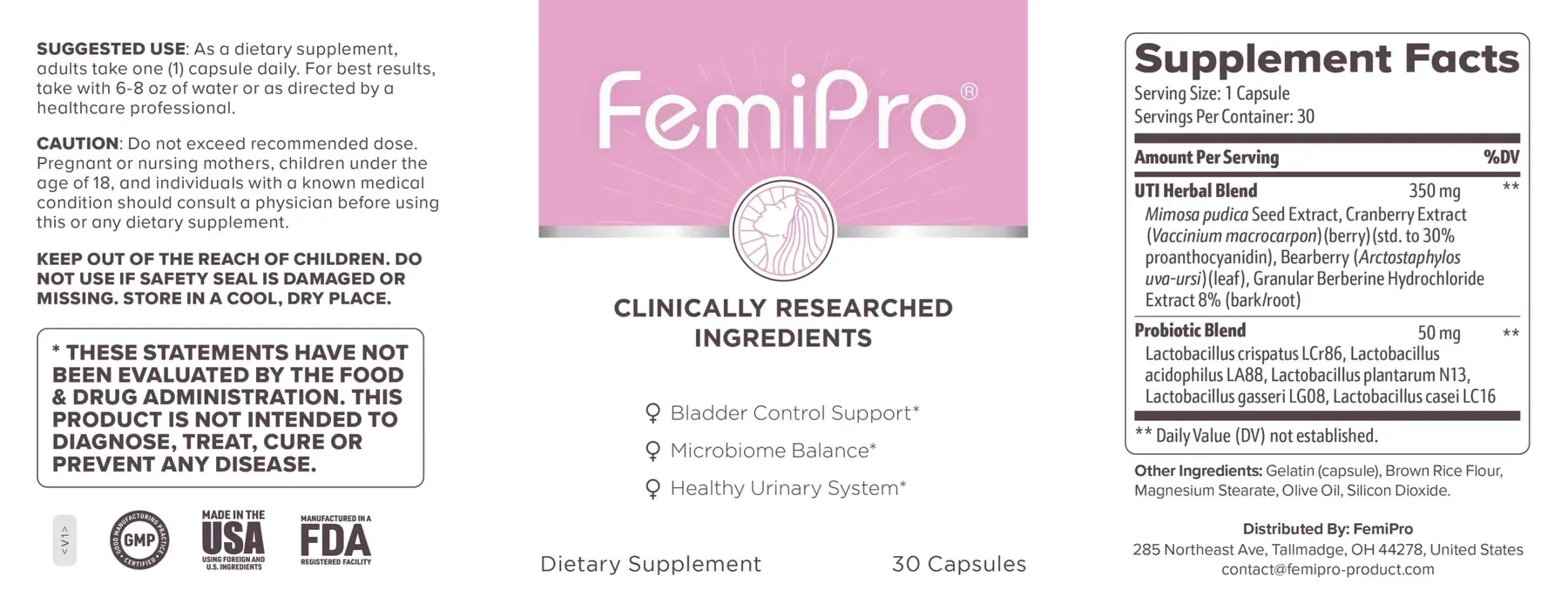
FemiPro Ingredients: The Full Label List, Line by Line
All nine actives in the two blends, what each one is and what the label leaves out.

FemiPro Reviews and Complaints: What Buyers Should Know
Why the review lines are sample copy, the six common complaints and how to raise one.

FemiPro Price: Cost Per Bottle, Per Pack and Per Day
The $69, $59 and $49 price tags, cost per day, bonuses and the 60-day window.

Cranberry PACs Explained: How Much Do Studies Use?
What PACs are, the 36 mg a day dose used in research, and why the cranberry dose in the herbal blend cannot be checked.
Bladder Habits That Help: Pelvic Floor, Fluids and Timing
Pelvic floor exercises, bladder training and fluid timing, plus the signs that mean it is time to see a doctor.
How to Read a Women’s Probiotic Label: Strains, CFU and Blends
A six-step label check, with the FemiPro label as the worked example and its missing CFU count named.
All FemiPro blog posts in one list
Every post is listed below, oldest first. Reading times are rounded and assume a steady pace.
| Article | Topic | Published | Reading time |
|---|---|---|---|
| Cranberry PACs Explained: How Much Do Studies Use? | Ingredients | July 18, 2026 | About 7 min |
| Bladder Habits That Help: Pelvic Floor, Fluids and Timing | Daily habits | August 9, 2026 | About 7 min |
| How to Read a Women’s Probiotic Label: Strains, CFU and Blends | Buying guide | September 6, 2026 | About 8 min |
How the FemiPro blog is written
Every post follows the same simple rules. They hold even when the answer does not flatter FemiPro.
- Every study is linked. Each research claim points to the paper or the public fact sheet behind it.
- Doses come first. A result means little without the amount people took, so the dose is printed.
- Gaps are named. If the label leaves out a number, such as a CFU count, the post says so.
- Claims stay honest. A supplement is not a treatment, and no post says otherwise.
- Words stay plain. Short sentences, everyday words and one idea at a time.
Where to start if you are new to bladder health
Start with daily habits, then the ingredients, then the label. That order moves from the free steps to the buying decision.
- Read bladder habits that help for pelvic floor exercises and bladder training.
- Read cranberry PACs explained to see what dose research uses.
- Read how to read a women’s probiotic label before you compare products.
Want the bigger picture? The urinary health guide covers the basics in one place. When you are ready to compare products, the guide to choosing a bladder support supplement lists what to check.
FemiPro blog: common questions
How often does the FemiPro blog publish?
There is no set schedule. A new post goes up when there is a clear reader question and solid research to link.
Are the FemiPro blog posts medical advice?
No. The posts explain published research and public health guidance in plain English. They do not replace a visit with your doctor.
Do the posts only praise FemiPro?
No. Each post names the gaps too, such as the unpublished herb amounts, the missing CFU count and the short-course advice for bearberry.
Can I suggest a topic?
Yes. Email [email protected] with your question. Reader questions often shape the next post.