Cranberry PACs Explained: How Much Do Studies Use?
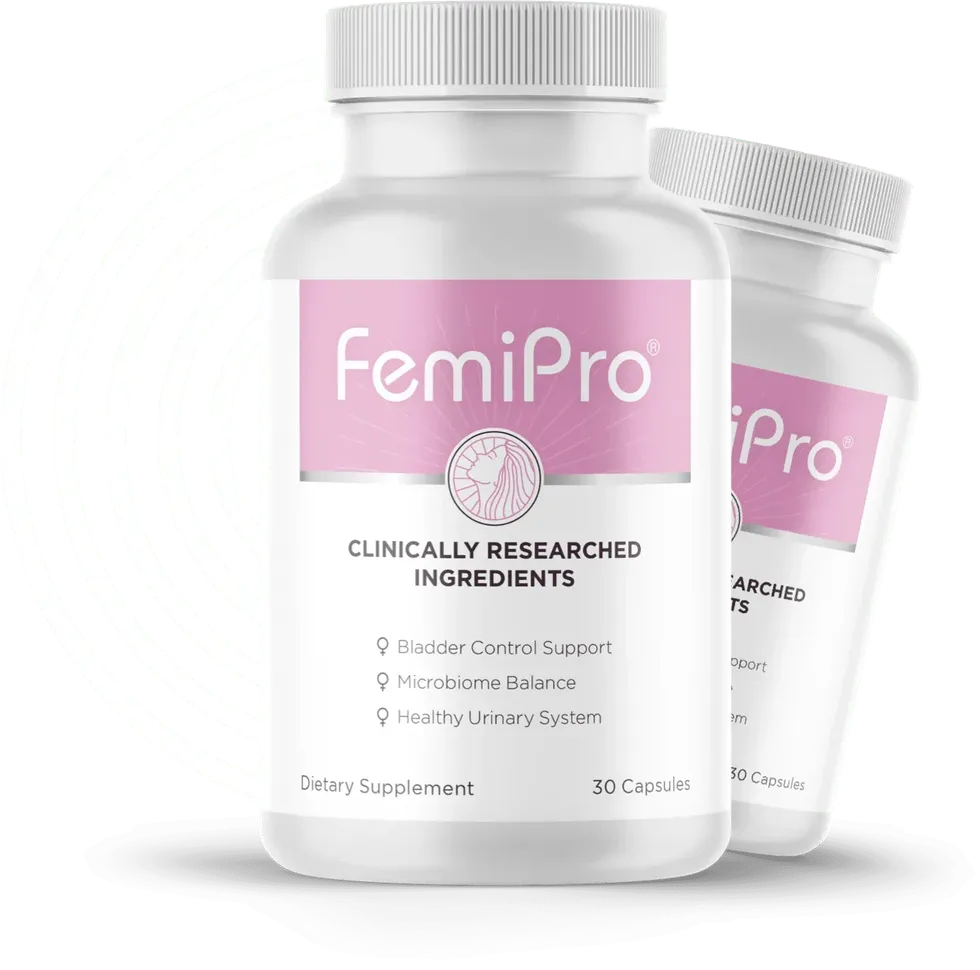
PACs are the cranberry compounds most urinary studies measure. A 2024 review of 10 trials found a lower UTI risk at 36 mg of PAC a day or more, with no clear benefit below that. FemiPro lists cranberry at 30% PACs inside a 350 mg herbal blend, so its PAC dose is not published.
What are cranberry PACs?
PACs are proanthocyanidins, a family of plant compounds that give cranberries part of their color and sharp taste. They are the part of cranberry that most urinary studies try to measure.
A cranberry supplement can list its PACs in two ways. It can print a percentage, such as “standardized to 30% PACs.” Or it can print a PAC amount in milligrams per serving.
Quick facts
- Full name: proanthocyanidins
- Source: the cranberry fruit (Vaccinium macrocarpon)
- Label forms: a percentage or a milligram amount
- Most useful for shoppers: the milligram amount
How are cranberry PACs thought to work?
Cranberry PACs are thought to make it harder for certain E. coli bacteria to stick to the lining of the urinary tract. Bacteria that cannot hold on are easier for the body to flush out with urine.
Researchers call this an anti-adhesion or anti-stick effect. It is a way to support the urinary tract, not a way to kill bacteria. That is also why cranberry is studied for repeat problems, not for an infection that has already started.
Why the dose matters for an anti-stick effect
An anti-stick effect only helps while PACs are active in the urine. In one dose study, the effect lasted a full day only at the highest dose, so a small dose may fade before the next one.
That is why researchers care about milligrams per day. A product with too little PAC may taste like cranberry and still miss the range that studies tested.
How much cranberry PAC do studies use?
Most positive cranberry research uses at least 36 mg of PAC a day. A 2024 review of 10 trials found that 36 mg or more lowered UTI risk, while lower doses showed no clear benefit (Xiong et al., 2024).
An earlier dose study gave 32 women 18, 36 or 72 mg of PAC (Howell et al., 2010). The anti-stick activity in their urine rose with the dose. It lasted a full 24 hours only at 72 mg.
| Study | PAC dose tested | What it found |
|---|---|---|
| Howell 2010 (Howell et al., 2010) | 18, 36 or 72 mg, 32 women | Anti-stick activity in urine rose with dose; 24-hour effect only at 72 mg. No infections were counted. |
| Xiong 2024 (Xiong et al., 2024) | 36 mg a day or more, 10 trials pooled | Lower UTI risk at 36 mg or more; no clear benefit below that. |
| Williams 2023 (Williams et al., 2023) | Juice, tablets or capsules; 50 trials, 8,857 people | Probably fewer repeat UTIs in women with recurrent UTIs. |
One caution about the Howell study. It measured a lab effect in urine samples. It did not track whether the women got fewer infections.
What does the Cochrane review say about cranberry?
The 2023 Cochrane review is the largest summary of cranberry research. It pooled 50 trials with 8,857 people and found that cranberry probably lowers repeat UTIs in women who get them often (Williams et al., 2023).
The benefit was not the same for everyone. The review found little or no benefit for older adults in care settings or for pregnant women.
Clearest benefit
Women with repeat UTIs. This is the group where cranberry products did best.
Little or no benefit
Older adults living in care homes. The result there was weak.
Not a clear fit
Pregnancy. The review did not find a helpful effect in this group.
The National Center for Complementary and Integrative Health gives a similar summary (NCCIH, 2024). It says cranberry may lower repeat UTIs in some women, and it is not a treatment for an active infection. In trials, PAC benefits showed up after 12 to 24 weeks, not days.
How much PAC is in FemiPro?
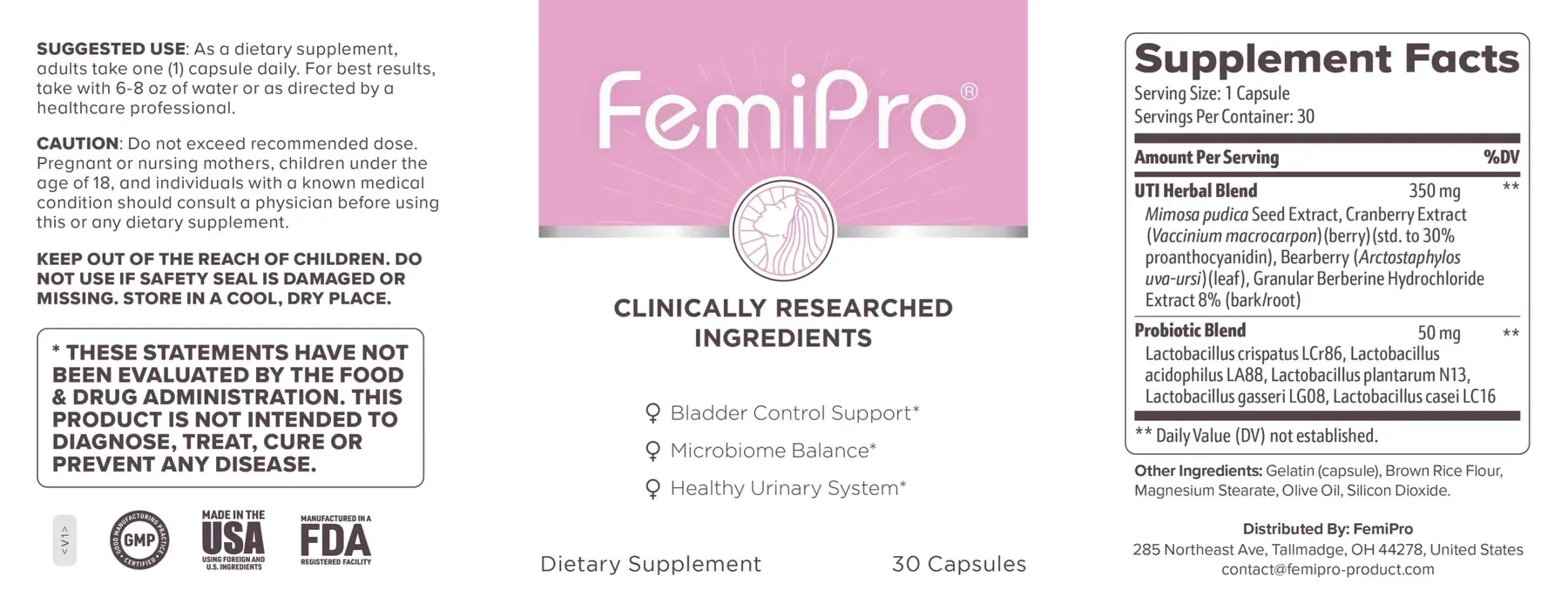
The FemiPro label does not say how much PAC it contains. It lists cranberry extract standardized to 30% PACs, but only inside a 350 mg “UTI Herbal Blend” with mimosa pudica seed, bearberry leaf and berberine.
Because the four herbs share one 350 mg total, the cranberry amount is not printed. That means the PAC dose cannot be checked against the 36 mg figure from research.
| Detail | Research | FemiPro label |
|---|---|---|
| PAC per day | 36 mg or more | Not published |
| Cranberry extract amount | Stated in each trial | Not published (part of a 350 mg blend) |
| PAC percentage | Varies by product | 30% |
| Other herbs in the same dose | Usually none | Mimosa pudica seed, bearberry leaf, berberine |
| Tested as a finished product | Yes, in trials | No |
Here is simple math to show the range. To reach 36 mg of PAC at 30%, a product needs 120 mg of cranberry extract. If all 350 mg of the blend were cranberry, it would hold 105 mg of PAC. It is not all cranberry, and the real share is unknown.
See the full FemiPro label
Two blends, four herbs, five probiotic strains and one capsule a day. Read every line before you decide.
How to check the cranberry PAC dose on any label
Look for a PAC amount in milligrams per serving. A percentage alone is only half the answer, because you also need the weight of the cranberry extract.
Find the cranberry line
Check the Supplement Facts panel for cranberry extract and its weight in milligrams.
Look for the PAC figure
Note whether the label gives a PAC percentage, a PAC amount, or neither.
Do the math
Multiply the extract weight by the PAC percentage. For example, 200 mg at 30% is 60 mg of PAC.
Watch for blends
If cranberry sits inside a blend with one total weight, the PAC amount cannot be worked out.
Compare with 36 mg
Set your number beside the 36 mg a day used in the 2024 review.
The same habit works for probiotics, which are dosed in CFU. Our guide on how to read a women’s probiotic label walks through that side of the panel.
Who should be careful with cranberry?
People who take warfarin should talk to a doctor before using cranberry. Research on cranberry and warfarin is mixed, so the doctor who manages your blood thinner should know (NCCIH, 2024).
FemiPro also contains bearberry and berberine, which bring their own cautions. The full list is on the FemiPro side effects page.
- Tell your doctor about every supplement you take.
- Keep taking any medicine your doctor prescribed.
- Stop and get checked if symptoms change or get worse.
Where does cranberry fit with other bladder habits?
Cranberry is one small piece of urinary health. Daily habits such as pelvic floor exercises, steady fluids and bladder training come first for bladder control.
Our post on bladder habits that help covers those steps in plain English. For the bigger picture, read the urinary health guide.
Cranberry PACs: common questions
What are PACs in cranberry?
PACs are proanthocyanidins, a group of plant compounds found in cranberries. Cranberry supplements often list a PAC percentage or a PAC amount in milligrams.
How much cranberry PAC do studies use?
A 2024 review of 10 trials found a lower UTI risk at 36 mg of PAC a day or more. A small 2010 study tested 18, 36 and 72 mg and saw the longest effect in urine at 72 mg.
How much PAC is in FemiPro?
It is not published. The label lists cranberry extract standardized to 30% PACs, but only as part of a 350 mg blend with three other herbs, so the cranberry amount is unknown.
Is cranberry juice the same as a PAC supplement?
Not quite. The Cochrane review pooled juice, tablets and capsules. A PAC figure on a supplement label is easier to compare with study doses than a glass of juice.
Can I take cranberry with warfarin?
Ask your doctor first. Research on cranberry and warfarin is mixed, so your care team should know before you start.
Does cranberry help older women in care homes?
The Cochrane review found little or no benefit in older adults living in care settings, or in pregnancy. The clearest benefit was in women with repeat UTIs.