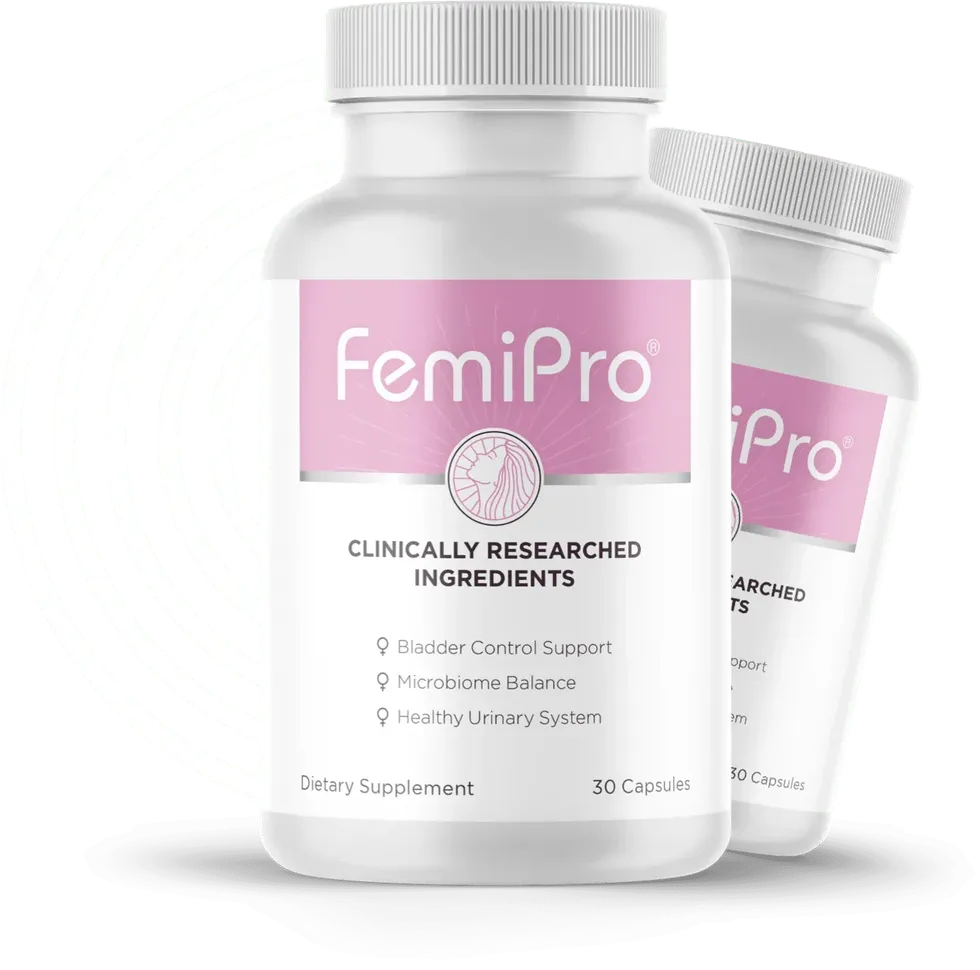
FemiPro Ingredients: What Each Capsule Holds
Each FemiPro capsule holds a 350 mg “UTI Herbal Blend” of mimosa pudica seed, cranberry extract (30% PACs), bearberry leaf and berberine HCl 8%, plus a 50 mg blend of five Lactobacillus strains. The shell is gelatin. The label prints no amount for each herb and no CFU count, so most doses cannot be checked against research.
What is inside one FemiPro capsule?
One FemiPro capsule holds two active blends. The first is a 350 mg herbal blend that the label calls the “UTI Herbal Blend.” The second is a 50 mg Probiotic Blend of five Lactobacillus strains.
The label lists the parts of each blend but not how much of each part is inside. That is common for a proprietary blend. It also means some doses cannot be checked.
| Ingredient | Blend | Plant part or type | Amount printed |
|---|---|---|---|
| Mimosa pudica seed extract | UTI Herbal Blend | Seed extract | Share of 350 mg, not given |
| Cranberry extract, 30% PACs | UTI Herbal Blend | Berry extract | Share of 350 mg, not given |
| Bearberry (uva-ursi) | UTI Herbal Blend | Leaf | Share of 350 mg, not given |
| Berberine HCl extract 8% | UTI Herbal Blend | Bark and root extract | Share of 350 mg, not given |
| Five Lactobacillus strains | Probiotic Blend | Probiotic blend | 50 mg in total, no CFU |
The full printed panel, line by line, is on the supplement facts page.
Mimosa pudica seed extract in FemiPro
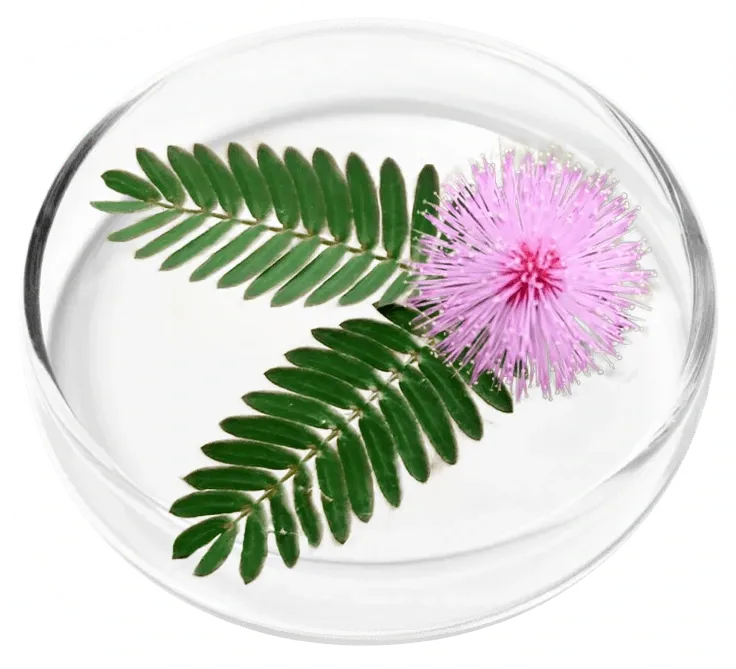
Mimosa pudica is a small tropical plant with pink puff flowers. Its leaves fold shut when touched, which gave it the nickname “sensitive plant.”
It is the first herb named in the FemiPro blend. The label does not say how much of the blend it makes up.
What the research on mimosa pudica shows
A 2023 review gathered the studies on this plant (Adurosakin et al., 2023). The work so far is in lab dishes and animals only. No clinical trial in people has been published, so there is no human dose to compare with.
Cranberry extract in FemiPro: the PAC question
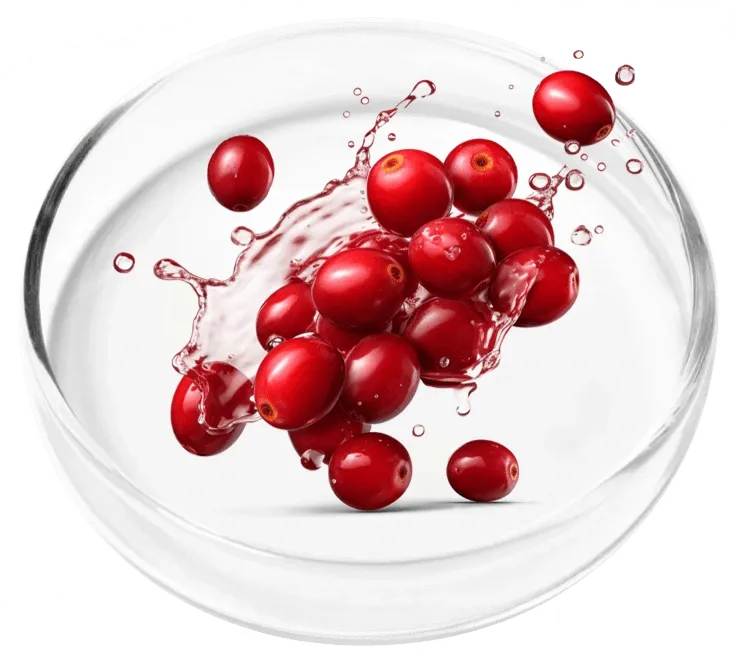
The cranberry in FemiPro is an extract standardized to 30% proanthocyanidins, or PACs. PACs are the plant compounds linked to cranberry’s urinary research.
What cranberry research found
- A Cochrane review of 50 trials found cranberry probably lowers repeat UTIs in women who get them often (Williams et al., 2023).
- A 2024 review found at least 36 mg of PACs a day lowered risk; smaller doses showed no clear benefit (Xiong et al., 2024).
- In a dose study, anti-stick activity in urine lasted a full day only at 72 mg PAC (Howell et al., 2010).
- Cranberry is not a treatment for an active infection (NCCIH, 2024).
A supplement cannot treat an active UTI. See a doctor for burning, fever, back pain or blood in the urine.
To reach 36 mg of PACs at 30%, a capsule would need about 120 mg of cranberry extract. That is about a third of the herbal blend. The label does not say whether FemiPro gets there. Our cranberry PACs explainer walks through the math.
Bearberry leaf in FemiPro: the one-week herb
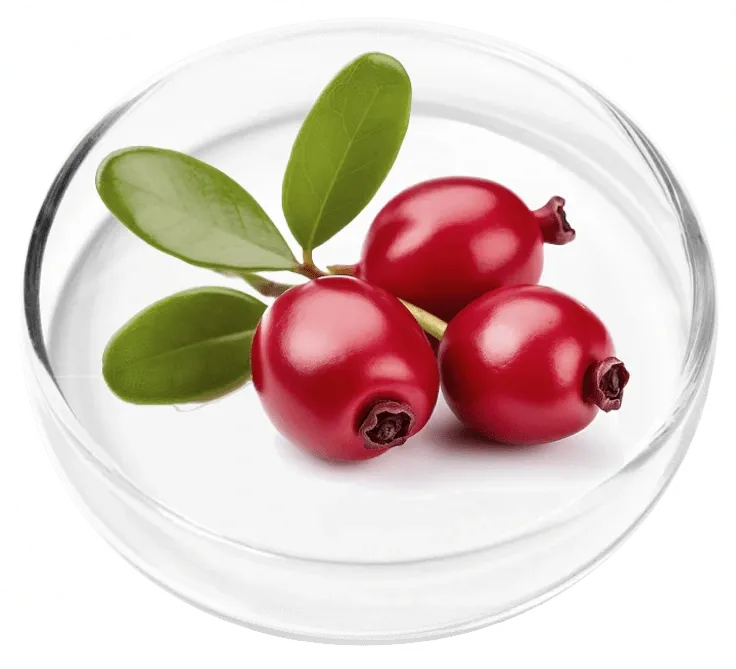
Bearberry, also called uva-ursi, is a low shrub with glossy leaves. The leaf holds arbutin, a compound with a long history in folk bladder remedies. It is the third herb named in the blend.
What European regulators say about bearberry
The European Medicines Agency accepts bearberry leaf as a traditional remedy for mild bladder symptoms in adult women (EMA, 2018). That monograph sets a limit of one week per course. It also rules it out in pregnancy, breastfeeding and under age 18.
The reason is arbutin. In the body it breaks down to hydroquinone, which is a concern with long-term use (EMA, 2018).
Berberine HCl in FemiPro: a small share of a small blend
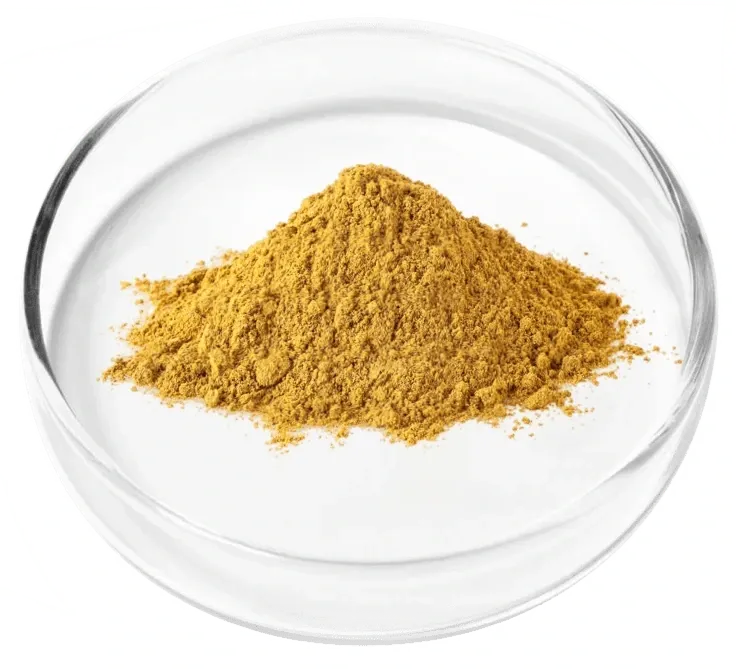
Berberine is a yellow plant compound taken from bark and root. The FemiPro label lists a “granular berberine hydrochloride extract 8%.” It is the last herb in the 350 mg blend.
What the berberine research covers
A 2025 review pooled 12 trials that used 300 to 1,500 mg a day (Liu et al., 2025). They looked at blood sugar and fats, with small changes. None of them measured urinary or bladder outcomes.
Berberine also slows several liver enzymes that clear common drugs (Guo et al., 2012). That matters even at low doses if you take daily medicine.
The whole herbal blend is 350 mg, shared by four herbs. So the berberine in FemiPro sits below the lowest dose used in those trials. If you take any prescription medicine, ask your pharmacist before adding berberine.
The FemiPro Probiotic Blend: five strains in 50 mg
The FemiPro Probiotic Blend names five Lactobacillus strains with strain codes. Strain codes are a plus, since probiotic effects depend on the exact strain (NIH ODS, 2025). The label gives the blend as 50 mg but no CFU count, the number of live cells.
- Lactobacillus crispatus LCr86
- Lactobacillus acidophilus LA88
- Lactobacillus plantarum N13
- Lactobacillus gasseri LG08
- Lactobacillus casei LC16
What probiotic trials found
A Cochrane review of 9 trials found oral probiotics did not clearly lower repeat UTIs (Schwenger et al., 2015). The strongest L. crispatus results came from strain CTV-05 placed in the vagina (Stapleton et al., 2011) (Cohen et al., 2020). FemiPro uses a different strain, LCr86, taken by mouth.
For tips on judging any women’s probiotic, see how to read a women’s probiotic label.
FemiPro dose vs research dose: an honest table
Most FemiPro doses cannot be checked against research because the label does not print them. Where a comparison is possible, the FemiPro amount looks low. The meter below shows study ranges next to what the label gives.
The cranberry share of the 350 mg blend is not printed, so the PAC dose is unknown. Sources: (Xiong et al., 2024) (Howell et al., 2010)
The whole herbal blend is 350 mg, so berberine sits below most research doses. Sources: (Liu et al., 2025)
Regulators advise short courses only; FemiPro is a daily product. Sources: (EMA, 2018)
Probiotics are dosed by CFU, which the label does not give. Sources: (NIH ODS, 2025)
FemiPro amount (when published) dose range used in human studies (log scale)
| Ingredient | FemiPro per capsule | Research dose | What we can say |
|---|---|---|---|
| Cranberry PACs | Not printed | 36 to 72 mg PAC a day | Unknown; needs about 120 mg of extract |
| Berberine | Not printed, inside 350 mg | 300 to 1,500 mg a day | Below research range |
| Bearberry (arbutin) | Not printed | 200 to 840 mg arbutin, 1 week max | Daily use runs past the limit |
| Mimosa pudica seed | Not printed | No human trials | Cannot be compared |
| Probiotic Blend | 50 mg, no CFU | 1 to 10 billion CFU is typical | Cannot be compared by weight |
What are the other ingredients in FemiPro?
The other ingredients in FemiPro are a gelatin capsule and four helpers. None of them is an active nutrient. They hold the powder, keep it flowing and keep it dry.
| Other ingredient | What it is | Why it is there |
|---|---|---|
| Gelatin | Animal-based protein | Forms the capsule shell |
| Brown rice flour | Ground whole rice | Fills space so each capsule is full |
| Magnesium stearate | Magnesium salt of a fatty acid | Stops powder sticking to the machine |
| Olive oil | Plant oil | Listed without a stated role |
| Silicon dioxide | A fine mineral powder | Keeps the powder from clumping |
Because the shell is gelatin, the capsule is not vegetarian or vegan. A vegetarian seal was shown in some sales graphics, but the label lists gelatin, and the label wins.
How to check the FemiPro ingredients yourself
You can match your bottle to this page in about a minute. Hold the bottle and turn to the Supplement Facts panel.
Find both blends
Look for the 350 mg UTI Herbal Blend and the 50 mg Probiotic Blend. Both should carry a double asterisk for no Daily Value.
Read the strain codes
Check the five codes: LCr86, LA88, N13, LG08 and LC16. A change would mean a new formula.
Check the shell
The other ingredients line should start with gelatin. That line tells you the capsule type.
Lot numbers are explained on the batch verify page. Possible reactions to each herb are on the side effects page.
FemiPro ingredients: common questions
How many ingredients are in FemiPro?
FemiPro has two active blends. The 350 mg “UTI Herbal Blend” holds four plant extracts, and the 50 mg Probiotic Blend holds five Lactobacillus strains. That is 400 mg of actives per capsule.
How much cranberry is in FemiPro?
The label does not say. The cranberry extract is standardized to 30% PACs, but its share of the 350 mg blend is not printed. So the PAC dose per capsule is unknown.
Is the FemiPro capsule vegetarian?
No. The label lists gelatin as the capsule shell. Some sales graphics show a vegetarian seal, but the printed label is the record we follow.
What is the CFU count in FemiPro?
The label gives the probiotic blend by weight only, 50 mg. It prints no CFU count. You can ask the order desk at +1 (302) 200-3480.
Why is bearberry a concern in a daily product?
European regulators advise bearberry leaf for one week at most. Its main compound, arbutin, breaks down to hydroquinone, which raises questions for long-term use.
Which probiotic strains does FemiPro list?
The label names L. crispatus LCr86, L. acidophilus LA88, L. plantarum N13, L. gasseri LG08 and L. casei LC16.